
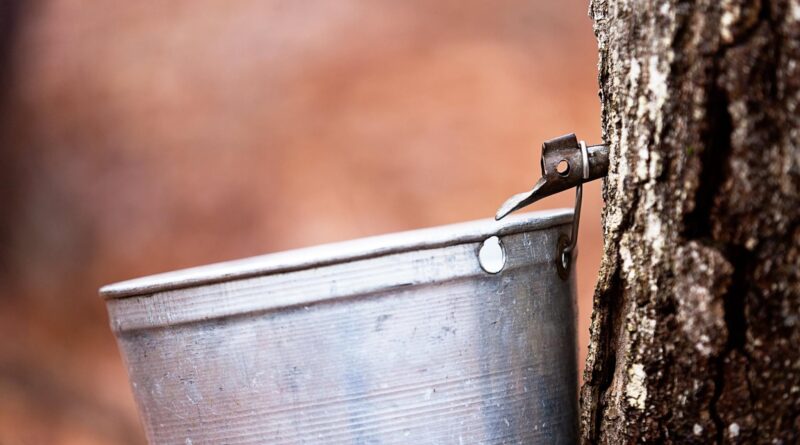
Tapping Into Michigan’s Annual Maple Syrup Weekends
To celebrate Michigan’s oldest agricultural activity, more than 20 members of the Michigan Maple Syrup Association invite Michiganders to experience this unique process during one of three Annual Michigan Maple Syrup Weekends coming up from mid-March through mid-April throughout both peninsulas:
- March 21-22: Southern Lower Peninsula (south of US10)
- March 28-29: Northern Lower Peninsula (north of US10)
- April 11-12: Upper Peninsula
The respective farms (listed below and attached) offer a variety of family-friendly activities that provide a chance for people to get a firsthand look at how maple sap is collected, boiled down and turned into sweet maple syrup and other maple treats. Many of the farms offer tours of their operation, including tree tapping demonstrations, samples of their products, recipes for the use of maple syrup and local maple syrup products available to purchase. Attendees are reminded to wear boots as mud and snow may still be abundant this time of the year.
Later in the season, two well-established festivals are also planned including the Vermontville Maple Syrup Festival (April 24-26) and Shepherd Maple Syrup Festival (April 26-26).
STATISTICS FROM U.S. DEPARTMENT OF AGRICULTURE:
Looking across the board for acreage, number of taps, tap yield and overall production, Michigan ranked #5 behind Vermont, New York, Wisconsin and Massachusetts. Nationwide in 2025, the United States saw 5.77 million gallons produced (down two percent from the previous season). The number of taps across the country totaled 16.8 million in 2025 (down 1 percent from 2024). The yield per tap was .342 gallons, unchanged from 2024 to 2025.
Despite widespread ice damage to trees and tap systems throughout northern Michigan in March 2025, maple syrup production across the state was up over 2024 according to the U.S. Department of Agriculture (USDA). The total number of acres in production was down 1,500 (11,300 acres in 2024 vs 9,800 acres in 2025) as was the yield per tap (.308 in 2024 vs .298 in 2025), but there were 30,000 more taps statewide yielding 3,000 more gallons at the end of the season. The value of the industry is reported around $9 million.
The 2024 Michigan harvest season was shortened by warmer temperatures, with overall production at 200,000 gallons (down from 205,000 gallons in 2023).
Over the past 15 years, Michigan has produced about 2 million gallons of syrup in what is regarded as the state’s oldest agricultural activity dating back to early Native Americans. Maple sugaring contributes to the overall $104.7 billion agricultural and $24 billion tourism industries here in Pure Michigan, according to the Michigan Department of Agriculture and Michigan Economic Development Corporation, respectively.
ABOUT THE MAPLE SUGARING:
The success of a season lies solely with Mother Nature. In the spring, as the days get longer and the temperatures rise (thanks to more minutes and hours of sunshine), sugar maple trees begin to release “liquid gold” – the clear sap which is boiled down into sweet and delicious maple syrup.
Due to its high sugar content of approximately two percent, sugar maple is the preferred tree for tapping, although black maple, red maple, silver maple and ash leafed maple — each with a sugar content of about one percent — can also be tapped to produce syrup. Sugar maple is Michigan’s most common tree species and the northern hardwood forests in which they grow in abundance covers about five million acres. And while some Canadian provinces and New England state area are often recognized as leaders in the maple sugaring industry, Michigan itself has more than three times the number of sugar maples than Quebec or Vermont, meaning the potential for growth is unlimited. Currently, Michigan utilizes less than one percent of its potential maple resources.
As with any agricultural crop, sap changes from farm to farm and region to region, depending on the soil content. The area’s climate and species of trees also play a role in this industry, meaning syrup flavor profiles change from region to region, even within the same state.
Of course, there’s more than just syrup to be enjoyed. Producers of maple syrup are also making candy, ice cream and other sweet treats with their bounty. Even Michigan wineries, breweries and distilleries are crafting beverages with maple sap or syrup for special seasonal offerings.
Founded in 1962, the Michigan Maple Syrup Association is a non-profit organization dedicated to the preservation of maple sugaring in Michigan and the promotion of Michigan pure maple products, representing 130 members around the state.
Michigan Maple Weekend participants
Southern Lower: March 21-22
- Benedict Family Maple, Vermontville
- Bryant Family Farm, Shepherd
- Butternut Creek Sugar Shack, Mendon
- Jenness Farms, Cass City
- Klopfenstein Maple Farms, Galien
- Law Family Farm, North Branch
- MapleWorxz, Caro (Since 1949)
- Shepherd Sugarbush, Shepherd
Northern Lower: March 28-29
- Bonz Beach Farms, Onaway
- Delaney’s Wood Fired Maple Syrup, Rose City
- Maple Dale Farm, Atlanta
- MSU Forestry Innovation Center, Escanaba
- Olds Brothers Maple Syrup, Kingsley
- Ron’s Pure Maple Syrup | Reetz Family Sugar Bush, West Branch (Since 1872)
- Sweet Success Sugar Bush, Mio
- Witt’s Maple, Boyne Falls
- Woods Farm, Rapid City
Upper Peninsula: April 11-12
- Besteman Maple Products, Rudyard
- Michigan Maple Farms, Rudyard
- Postma Brothers Maple Syrup, Rudyard
- Twisted Tap Sugar Shack, Pickford
Pure Michigan Maple Syrup Facts
- There are an estimated 500 commercial maple syrup producers in Michigan with some 2,000 additional hobby or home-use producers.
- Michigan law requires that processor of maple syrup must be licensed.
- Only about 1 percent of Michigan’s maple forest resource is used in maple syrup production.
- Maple syrup is the first farm crop to be harvested in Michigan each year – starting in February in the southern counties and running well into April in the Upper Peninsula.
Maple Sugaring Tidbits
- The production of pure maple syrup is the oldest agricultural enterprise in the United States, dating back to the earliest Native Americans.
- Warm sunny days and freezing nights determine the length of the maple season.
- Freezing and thawing temperatures create pressure and force the sap out of the tree – with a very rapid rise in temperature (25 to 45 degrees) to enhance the sap flow.
- While the sugaring season may last 6-10 weeks, the heavy sap may run only 10-20 days.
- The budding of maple trees makes the maple syrup taste bitter. Thus, production ceases.
- A maple tree needs to be about 35-40 years old and have a diameter of 10 inches before tapping is recommended.
- In an average year, each taphole will produce about 10 gallons of maple sap, enough for about a quart of maple syrup.
- It takes approximately 40 gallons of maple sap to make 1 gallon of maple syrup.
- Maple sap is a slightly sweet, colorless liquid with an average sugar concentration of 2-3%.
- A gallon of standard maple syrup weighs 11 pounds and has a sugar content of 66.5%.
- Maple syrup has 50 calories per tablespoon and is fat-free. It has no additives, no added coloring and no preservatives.
- Maple syrup is classified as one of nature’s most healthful foods.
- Maple syrup has may minerals per tablespoon: 20 milligrams of calcium, 2 milligrams of phosphorus, 0.2 milligrams of iron, 2 milligrams of sodium, 35 milligrams of potassium.
- Maple sap is boiled to remove the water and concentrate the sugars in a process called evaporation.
- In a conventional evaporator one cord of hard wood is required for every 25 gallons of syrup produced.
- Tubing collection systems with vacuum can increase average sap yields approximately 50 percent.
- Maple sap becomes maple syrup when boiled to 219 degrees Fahrenheit, or 7 degrees above the boiling point of water.
- Maple syrup is one of the few agricultural crops in which demand exceeds supply.